
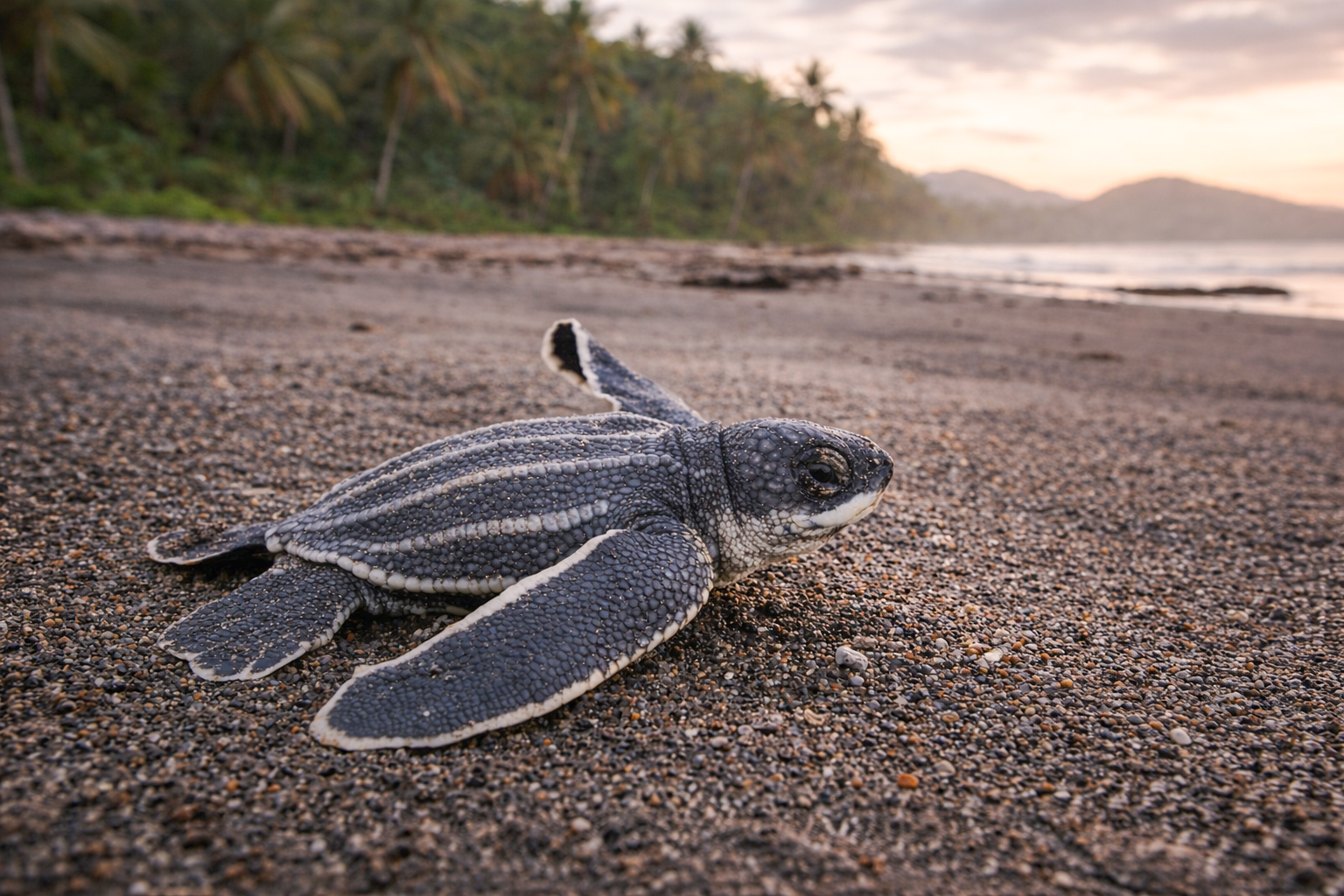
A Pacific Treasure at Risk: Saving PNG’s Leatherback Turtles
There are 7 sea turtle species in the world and of the 7, according to a report by the National Fisheries Authority (NFA), 6 are known to be found in the waters of Papua New Guinea (PNG). The 6 species include the Green turtle, Hawksbill turtle, Leatherback turtle, Loggerhead turtle, Flatback turtle and Olive Ridley turtle. The Convention on the Conservation of Migratory Species of Wild Animals and the Convention on International Trade in Endangered Species of Wild Fauna and Flora outline in their appendices that sea turtles globally have a priority for conservation action.
Sea turtle harvesting is a traditional fishery undertaken by coastal people for its meat and eggs for consumption and trade and their shells are used to make lime spatulas, earrings and bangles and for ceremonial purposes. The NFA report highlighted that a rough estimate harvest of Green turtles in PNG was between 100 to 200 thousand per year; however, an accurate estimate is complicated because the majority of the harvesting is centred in remote areas.
The largest of all sea turtles, the Leatherback turtle is unique for their leathery shell and nests along several coastal areas of PNG. With the decline of Leatherback turtles throughout the Western Pacific region, PNG is known to be one of the few remaining strongholds for Leatherback turtle nesting in the Pacific. Many communities in PNG, especially in the Huon Coast of Morobe Province and the North Coast of Madang Province, have embarked on community conservation initiatives to help conserve the Leatherback turtles, as these were identified as the key nesting sites.
PNG, Indonesia and the Solomon Islands have agreed to protect the endangered Leatherback turtles in the Pacific through joint conservation activities. This tri-national partnership is supported by the World Wildlife Fund (WWF) and through this partnership, the three countries aim to enhance conservation of the Leatherback turtles through information sharing, data exchange and cooperative research. Despite efforts both at the community level and the national level, the population of the Leatherback turtles is reported to be declining due to domestic and commercial exploitation of their eggs and the destruction of their nesting beaches.
Are we doing enough to protect leatherback turtles, and can we turn the tide so future generations can see them in PNG?


Leave a Reply