
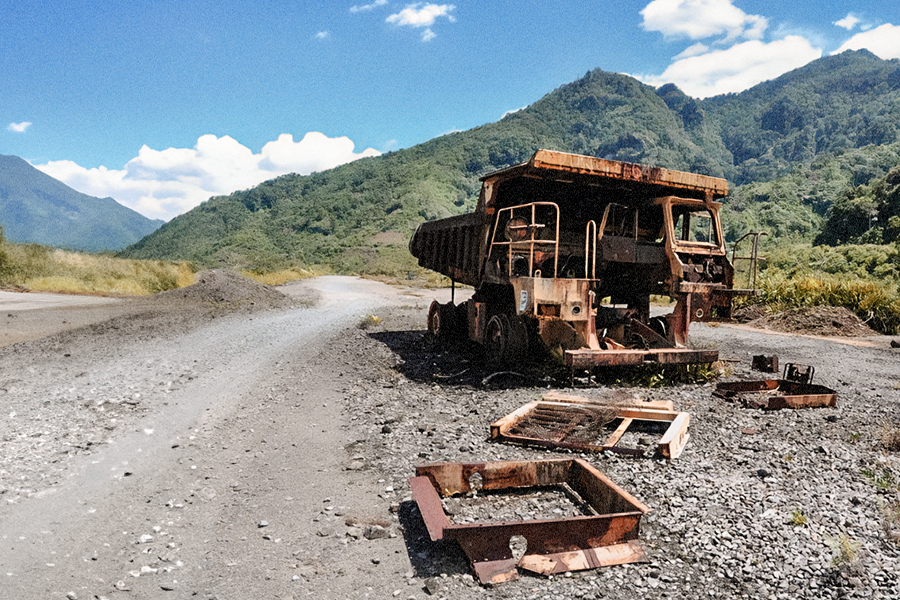
During the 1970s, the Bougainville Copper Mine, operated by Bougainville Copper Limited (BCL), was the largest copper mine in the Southern Hemisphere. Its vast scale was such that it could encompass the Central Business Districts of Sydney or Melbourne, Australia. The mine played a critical role in the economy of Papua New Guinea (PNG), contributing 12 percent to the nation’s Gross Domestic Product (GDP) and accounting for over 45 percent of its export revenue.
While the mine spurred the development of a skilled workforce and significant infrastructure, it also caused severe environmental damage and provided insufficient financial compensation to landowners. This combination of factors fueled growing discontent among the local population, with key figures like Francis Ona leading the opposition, which eventually escalated into the Bougainville conflict.
Known also as the Bougainville Crisis or Civil War, this conflict lasted from 1989 to 1999. It was a complex armed struggle involving PNG and the secessionist Bougainville Revolutionary Army (BRA), along with various other militant groups on the island. The conflict had a devastating impact, displacing and killing an estimated 15,000 to 20,000 people.
Efforts to negotiate peace were further complicated in the late 1990s when the government hired international mercenaries (Executive Outcomes), which led to numerous failed peace attempts until the Burnham Declaration.
In 1996, a significant easing of tensions occurred when the first PNG bipartisan government delegation visited Laguai, Bougainville, marking the first such visit since the conflict began. However, the military outcry on March 17, 1997, by Colonel Jerry Singarok exposed the backers of the Sandline operation, effectively ending its planned activities on the island.
The administration of Sir Julius Chan fell following these events, and Sir William Skate became Prime Minister. The late Sir Peter Barter, then Minister for Provincial and Local Level Government, worked diligently with various peacekeeping groups to foster peace in Bougainville.
In 1999, the PNG Government endorsed the establishment of the Autonomous Bougainville Government under the Bougainville Peace Agreement. Discussions have continued about possibly reopening the mine, with proponents arguing that a resource company would be necessary to mitigate the environmental damage.
If reopened, the mine could potentially inject almost $90 billion into the economy. However, the lifespan of the mine remains uncertain, and the decision to reopen it is highly contentious, given the need to balance potential economic benefits against the profound social and environmental costs.
Today, the people of Bougainville continue to live with the dual legacies of the conflict and the environmental damage caused by the mine, highlighting the complex challenges of balancing resource extraction with sustainable development and social equity. Will the reopening of the Panguna Mine bring in more benefits or destruction?


Leave a Reply