
A constitution is essential because it lays down the fundamental guidelines for a country’s governance. It not only establishes the rule of law, ensuring stability and promoting citizen participation, but it also protects against tyranny by safeguarding fundamental freedoms and ensuring government accountability. By defining the structure of the government and setting forth principles of justice and equality, a constitution prevents the abuse of power, serving as the supreme law that guides a nation both morally and politically.
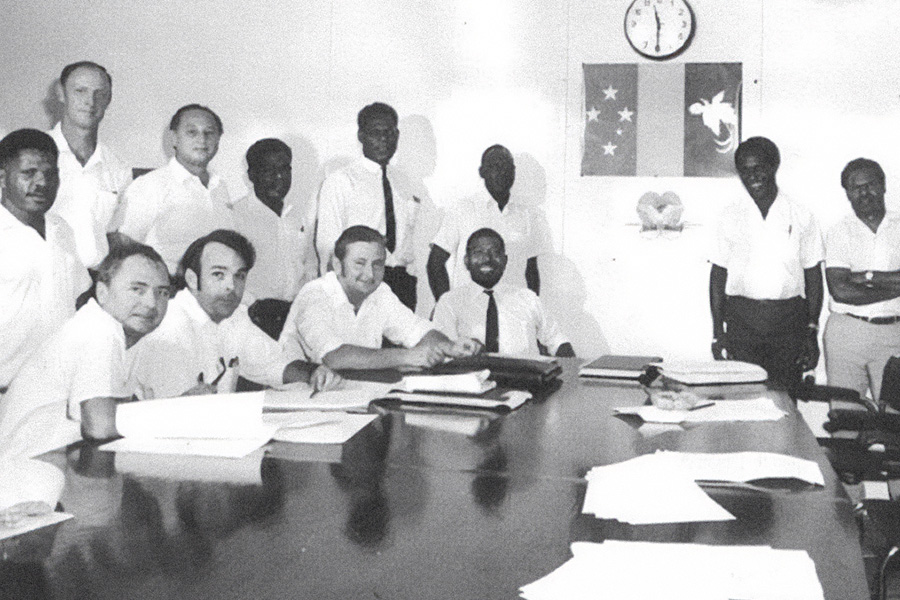
In June 1972, during Papua New Guinea’s (PNG) time as a territory of Australia, Grand Chief Sir Michael Somare, then Chief Minister, initiated the formation of a Constitutional Planning Committee to carve a political future for PNG. As chairman, with John Momis as deputy chairman, Somare led the committee, composed of Legislative Council members from 1962 and educated elites from PNG Administrative College and the University of Papua New Guinea. These members were adept in the political nuances of the territory.
Under Somare’s leadership, an inclusive approach was adopted to draft the constitution. Through Constitutional Development Forums during two national tours, the committee sought the public’s opinions on constitutional development. This period marked the inception of the directive principles, later enshrined as the five national goals in the constitution’s preamble.
A draft constitution was presented to the House of Assembly in 1974 and formally adopted on September 16, 1975, marking PNG’s independence. The crafting of the PNG Constitution was a collaborative effort led by Grand Chief Sir Michael Somare and Dr John Momis, alongside thirteen other assembly members, consultants, and support staff. The constitution, integral to the governance of PNG, has been in effect since the country’s independence.
This narrative raises a critical question: How would a country operate without a constitutional framework to guide its governance and protect its people?


Leave a Reply