
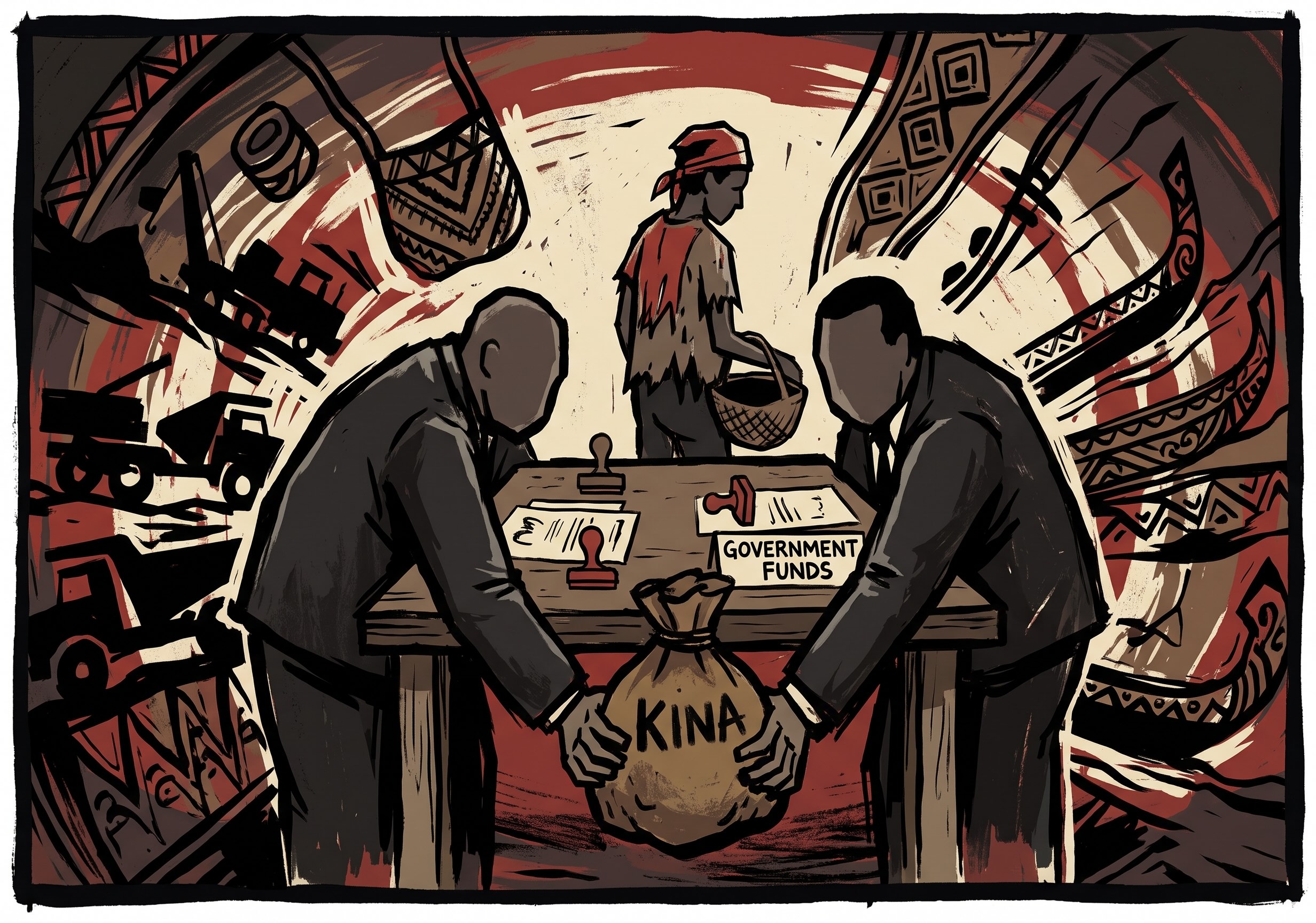
Papua New Guinea’s Financial Analysis and Supervision Unit (FASU) Annual Report 2025 highlights entrenched corruption and weak governance as major threats to development. The FASU Report bluntly states, “Corruption remains the most serious financial crime in Papua New Guinea, generating hundreds of millions of Kina in illicit proceeds each year”. Funds are often stolen through collusion between officials and private firms, bypassing budgets and controls. Investigations show that even police and defence agencies are deeply compromised. PNG’s crime index notes law enforcement is viewed as “the most corrupt public agency” and that officers regularly take bribes or even join trafficking rings.
The report flags high-risk sectors (forestry, fisheries) and urges stronger oversight and enforcement to protect public resources.
The report confirms that corruption is the country’s most serious financial crime, generating “hundreds of millions” of kina in illicit proceeds (often via collusion, bypassing government controls). Drug importation, illegal logging, fishing and gold exports remain key money-laundering channels. For example, a sectoral risk assessment estimated that at least USD 2 billion was siphoned from forestry between 2014 to 2019 and flagged corruption by politically exposed persons and illicit logging as core vulnerabilities.
PNG’s financial intelligence unit has filed thousands of suspicious transaction reports, but fewer than five money-laundering convictions have been secured in two decades. PNG’s fragmented, patronage-based politics further compound these challenges. By contrast, billions of kina continue to leak from public coffers with little recovery.
FASU and partner agencies are responding by coming up with new initiatives, such as the ARROW task force, and have begun asset seizures (over K300,000 in one case) and joint referrals for prosecution. FASU is coordinating a national anti-money-laundering action plan under the Financial Action Task Force’s (FATF) guidance. Experts say further steps are needed in areas such as empowering anti-corruption agencies, improving financial oversight of extractive industries and coordinating the implementation of the FATF/NCC action plan.
How can Papua New Guineans demand real accountability from leaders and break the cycle of high-level corruption?


Leave a Reply