
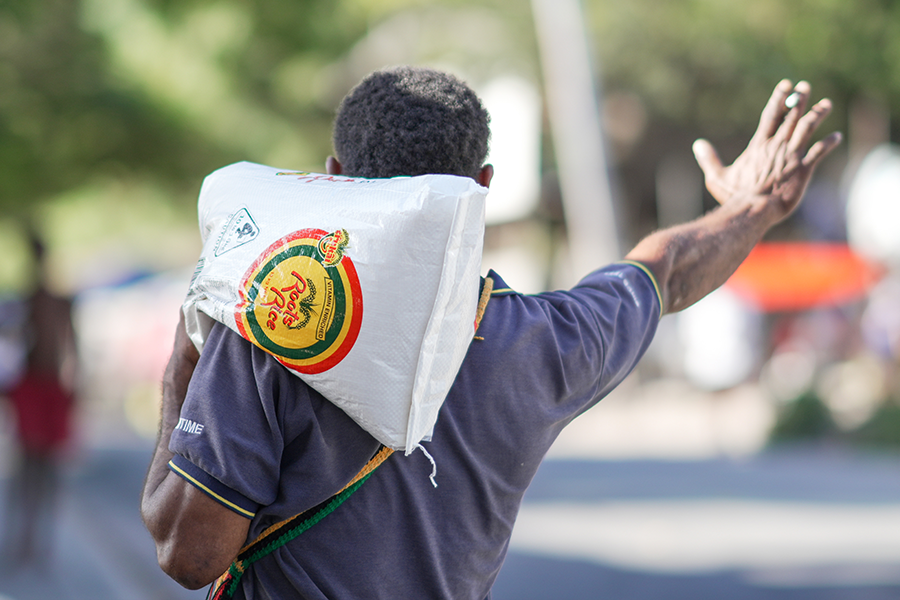
Thirty years ago, a 10kg bag of rice in Papua New Guinea (PNG) cost under K5. Today, that same bag costs 900% more. This significant increase leaves many wondering why their parents and grandparents had it easier to afford everyday essentials.
The answer lies in the boom-and-bust cycles that have shaped PNG’s economic development. These cycles are periods of rapid growth (booms) followed by downturns (busts) and have occurred in PNG since the mid-1980s, with more noticeable impacts in the late 1990s and mid-2000s. Several factors have contributed to the sharp rise in living costs.
Several factors contribute to this, one of which is inflation. Inflation refers to the general increase in prices over time. In recent years, inflation rates in PNG have been consistently higher than in previous decades. This means that the cost of goods and services, such as food, fuel, and transportation, has risen, making it more expensive for consumers to meet their daily needs.
Another factor is that PNG’s population has grown, as has the demand for goods and services. More people need food, housing, and transportation, which puts pressure on the supply of these essentials. When demand outpaces supply, prices increase, making basic items more costly than they were years ago. Another important issue is the devaluation of the Kina. For instance, between the end of 1994 and October 2002, the Kina depreciated by 72 percent from USD 0.85 to USD 0.23.
The globalisation of trade has also brought both advantages and challenges. While PNG imports many goods from other countries, the increasing costs of production and transportation, as well as the dominance of monopolies in certain industries, have driven up the prices of these imports. As a result, everyday items, such as food and household products, are more expensive than they were generations ago. PNG imports nearly 98 percent of rice at an annual volume of around 400,000 metric tonnes. So, if the Kina depreciates, the price of rice is impacted.
While technology has improved efficiency in many industries, it also comes with a cost. New technology often requires businesses to invest in expensive equipment or systems, leading to higher production costs. These costs are then passed on to consumers, contributing to the rising prices of goods and services.
Housing costs have skyrocketed, especially in urban areas such as Port Moresby and Lae. As more people move to cities in search of jobs, the demand for housing increases, driving prices up. Many families now struggle to afford rent or homeownership, which was not as challenging for previous generations.
While the cost of living has soared, wages have not kept up. Wage growth in PNG has been slow, meaning that even though prices are rising, people’s incomes have remained relatively stagnant. This has made it difficult for many to afford the basic necessities without stretching their budgets too thin.
The rising cost of living in PNG can also be partly attributed to missed opportunities in managing economic development. Policymakers have not been able to effectively control inflation, address wage stagnation, or regulate industries that contribute to the high cost of essential goods and services. Additionally, reliance on boom-and-bust cycles without investing in long-term sustainable growth has left the country vulnerable to economic shocks, making life more expensive for everyday people.
As PNG deals with the high cost of living, it’s clear that multiple factors—ranging from inflation to globalisation—are at play. The challenge for the government and policymakers now is to address these issues to ensure that future generations don’t face the same financial struggles as today’s population. With better planning and regulation, it’s possible to improve affordability and help families maintain a reasonable standard of living.
The pressing question now is, what can be done now to ease the financial burden on everyday Papua New Guineans and ensure a more stable economy for future generations?


Leave a Reply