
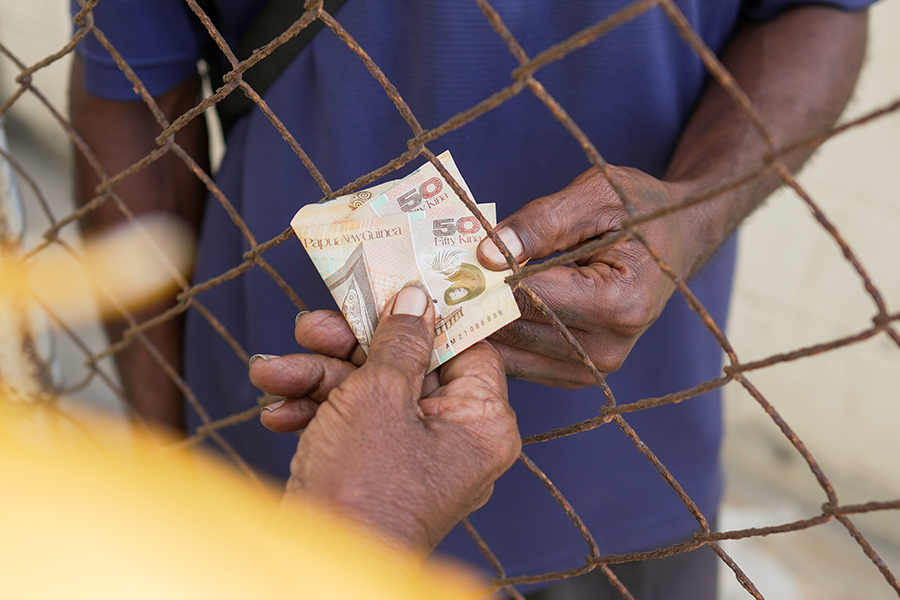
When faced with urgent financial needs, many people in Papua New Guinea turn to informal money lenders, often referred to as dinau, buking man, or meri, for quick cash. These lenders can provide immediate funds, especially for individuals who may not qualify for traditional bank loans due to poor credit or other financial challenges. A report from Minister of Public Service Joe Sungi revealed that 70% of public servants in PNG owe money to informal lenders. In an interview with one of the dailies on August 4th, 2023, the Bank of PNG Assistant Governor and Manager of Financial Systems Stability Group George Awap said PNG still has about 80 percent of its population unbanked or underbanked with no access to financial services.
While borrowing from these lenders may seem like an easy solution, it’s important to weigh both the advantages and disadvantages. One major benefit of informal money lenders is quick access to cash. Unlike traditional banks, they often provide fast loans with minimal paperwork and no credit checks, making it easy to obtain funds when urgently needed. Additionally, these lenders may offer more flexible repayment terms, allowing borrowers to negotiate schedules that suit their financial situation. Another advantage is that some informal lenders do not require collateral, so borrowers don’t risk losing their property to secure a loan. For those who value privacy, informal lenders usually keep financial transactions confidential.
However, the disadvantages are significant. Informal lenders often charge very high interest rates, which can quickly trap borrowers in a cycle of debt. Furthermore, these lenders operate outside of the formal banking system, meaning they are unregulated. This lack of oversight can expose borrowers to predatory practices, including harassment, intimidation, and even violence. Many borrowers also face a lack of transparency, as they may not fully understand the loan terms, leading to confusion or exploitation. Moreover, borrowing from informal lenders can be illegal in some cases, exposing borrowers to potential legal consequences.
While informal loans can provide quick financial relief, the risks often outweigh the benefits. It’s essential for borrowers to explore other options, such as legitimate financial institutions. Achieving financial security is best done through responsible borrowing and careful financial planning. Before taking out a loan, it’s important to ask yourself: is borrowing from an informal lender truly worth the risk in your particular situation?

Leave a Reply