
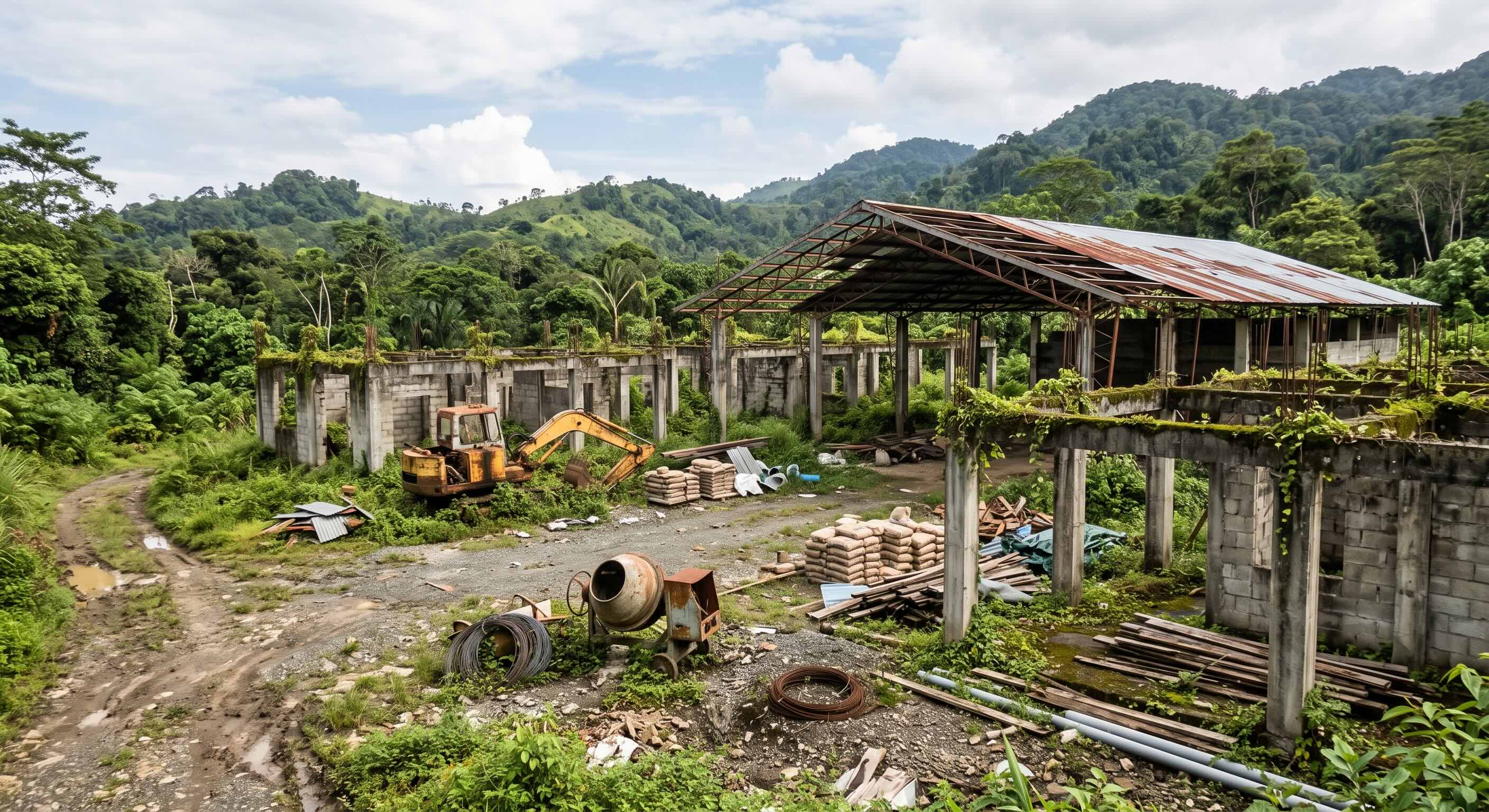
Ghost infrastructure projects that are funded but abandoned, incomplete, or never delivered, has become a serious development issue in Papua New Guinea (PNG). From unused health centres to roads that stop halfway, these projects represent millions of kina in wasted public funds. More importantly, they deny communities access to essential services such as healthcare, education and transport, slowing national development.
According to a performance audit by the Auditor-General’s Office of PNG, several district-funded projects were classified as “ghost projects,” with some having “nothing to show for the expenditure” despite full payments being made. The audit found widespread non-compliance with procurement processes and weak documentation, raising serious concerns about accountability and transparency in public spending.
One of many examples was found in the Gazelle District of East New Britain Province. The Gazelle District performance audit was commissioned in 2017 and covered District Services Improvement Program (DSIP) spending from 2007 to 2016, with the final report released in December 2020 by the Auditor-General’s Office. It found that out of about K38.05 million reviewed (2013–2016), roughly K17.95 million could not be properly accounted for, with widespread evidence of “ghost projects,” incomplete infrastructure and poor financial management. Examples included a K3 million market project that did not exist on the ground and a K489,782 fibreglass project that was reduced to a fenced site with minimal structures. The audit also identified missing records, a lack of proper procurement processes, payments made without verified work completion, and weak oversight systems, alongside under-spending in critical sectors such as health and education. Overall, the report concluded that there were serious breaches of financial and procurement laws, possible fraud risks and systemic failure to ensure value for public money, leading to major development gaps and incomplete public infrastructure.
The causes of ghost infrastructure in PNG are deeply rooted in governance challenges. Weak oversight systems allow funds to be disbursed without proper monitoring. Audits have revealed missing documentation, lack of contracts and failure to follow procurement laws, increasing the risk of fraud and mismanagement. In some cases, conflicts of interest and poor planning further undermine project delivery. Additionally, broader investigations have suggested that large portions of development budgets have been lost through corruption and mismanagement, indicating systemic issues.
The impact on the country is significant. Ghost infrastructure wastes scarce national resources and erodes public trust in government institutions. It also widens inequality, particularly in rural areas where communities depend heavily on public infrastructure. When clinics remain unopened or roads are unfinished, economic opportunities are lost and basic living standards decline.
Addressing this issue requires stronger enforcement of financial regulations, improved project monitoring and greater transparency in public spending. Holding contractors and officials accountable is essential to ensure that funded projects are completed and serve their intended purpose.
How can the country ensure that public funds translate into real infrastructure rather than projects that exist only on paper?


Leave a Reply