
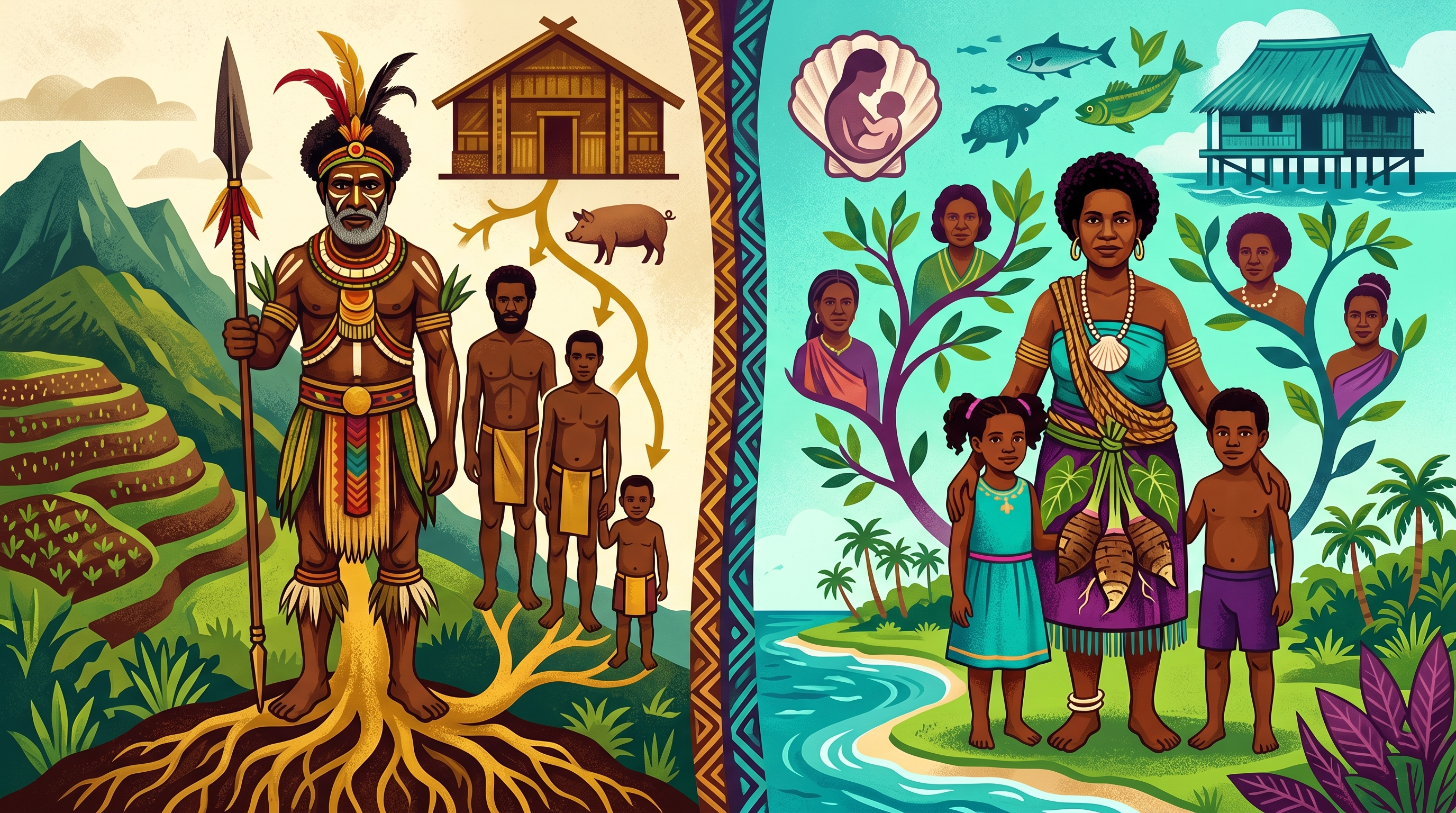
Papua New Guinea (PNG) is one of the most culturally diverse countries in the world and this diversity is reflected in its kinship systems, how people trace descent, inherit property and organise social life. Two main systems of societal structures found in PNG are matrilineal and patrilineal societies.
PNG is predominantly a patrilineal society where lineage and land inheritance pass through the male line, especially in the Highlands and mainland regions. Matrilineal societies, where descent and land rights follow the mother’s line, are primarily found in coastal provinces and island regions, including parts of East New Britain, the Autonomous Region of Bougainville and Milne Bay.
In matrilineal societies, descent and inheritance are traced through the mother’s line. This means that children belong to their mother’s clan and land and property are often passed down through female relatives. For example, in parts of the Autonomous Region of Bougainville, East New Britain, Milne Bay and New Ireland, land rights are traditionally held by women and passed to their daughters or female kin.
Matrilineal systems give women a vital role in community life. Although men often hold formal leadership, such as clan decision-making positions, women’s control of land and kinship links provides them with social influence and security. Importantly, maternal uncles commonly play major roles in raising their sisters’ children and managing clan affairs, highlighting how matrilineal descent influences family roles and authority.
In contrast, patrilineal societies, which are widespread throughout most of the Highlands and many mainland coastal areas, trace descent and inheritance through the father’s line. Here, land and property are passed from fathers to sons and male lineage determines clan membership and authority. Women typically join their husband’s clan upon marriage and do not inherit land from their fathers.
The difference between these systems has real social effects: they shape gender roles, land rights and social support structures within communities. While patrilineal systems tend to concentrate wealth and authority among male kin, matrilineal systems create important roles for women and their brothers, particularly around land and kinship responsibility.
In a country as diverse as PNG, how do both matrilineal and patrilineal systems continue to shape identity, land ownership and the roles of men and women in their communities today?


Leave a Reply