
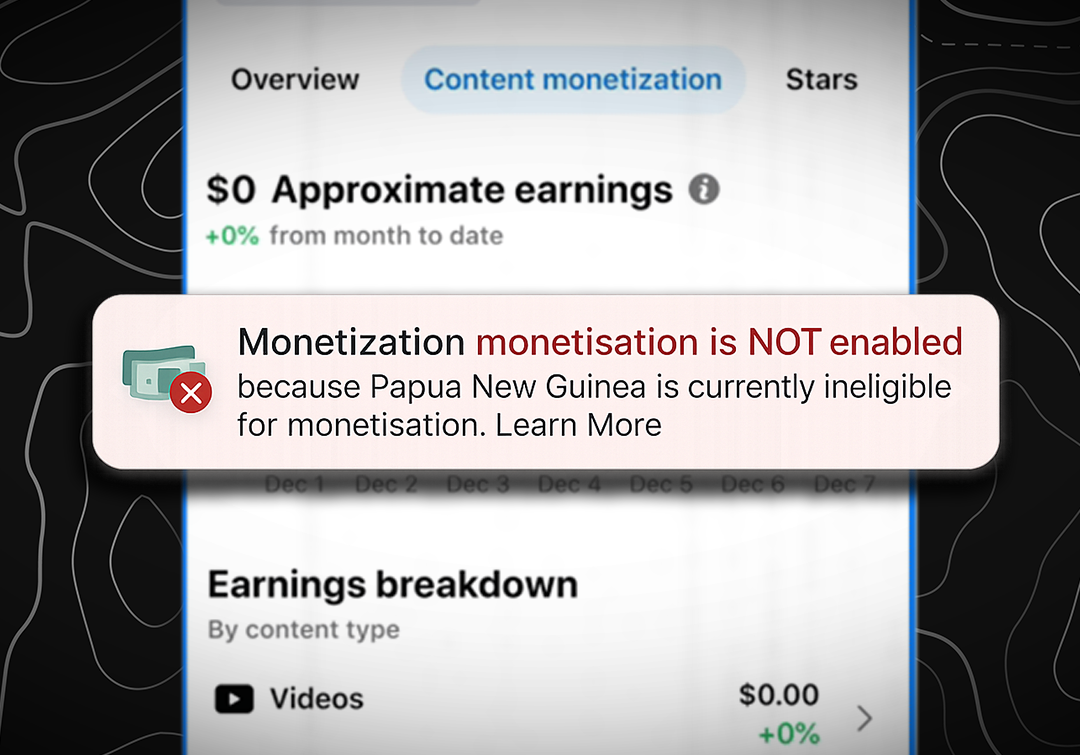
The monetisation of online content refers to earning income through digital platforms such as YouTube, Facebook, Instagram and TikTok. In Papua New Guinea (PNG), this concept is becoming increasingly important as internet access expands and more young people engage in content creation. From entertainment to small business promotion, digital platforms are opening new economic opportunities, although the country is still developing in fully supporting this space.
According to recent reports, social media plays a major role in communication and business activity in PNG, with platforms like Facebook having over a million users and being widely used for advertising and public engagement. However, while many Papua New Guineans actively create content, most are unable to earn directly from it due to limited monetisation access and policy gaps. Lawmakers have raised concerns that although platforms like YouTube offer some monetisation options, others such as Facebook and TikTok, do not fully support local earnings. This has left many young creators promoting culture and businesses online without financial return.
The Department of Information and Communications Technology (DICT), led by Secretary Steven Matainaho, is actively working to expand monetisation opportunities for PNG’s online content creators. DICT has formally requested that Meta enable monetisation features on Facebook and Instagram for PNG users, emphasising that this is a government priority.
Secretary Matainaho has stressed that monetisation requires more than platform access; it depends on strong digital infrastructure. Key initiatives include the development of Digital ID systems through the eGovernment portal to verify users and meet global compliance standards, as well as broader legal and cybersecurity reforms to create trust and support monetisation.
For creators, this means YouTube monetisation is now accessible, but Facebook and Instagram monetisation remain pending while discussions continue with Meta. Current limitations, such as the lack of international payment platforms such as Stripe and PayPal, are being addressed in collaboration with the Bank of Papua New Guinea. These measures, combined with digital ID and policy reforms, aim to enable PNG creators to participate fully in monetised programs globally.
Looking ahead, the government has acknowledged the need to develop a stronger digital economy. Plans are underway to reform policies, improve payment systems and create legal frameworks that allow content creators to earn income. Officials have also highlighted the importance of digital skills training and partnerships with the private sector to support online entrepreneurs. There is growing recognition that social media is no longer just for communication but also a source of employment and economic growth.
With these steps underway, will PNG’s policies, infrastructure, and partnerships be enough to turn online content creation into a sustainable source of income for local creators?


Leave a Reply