
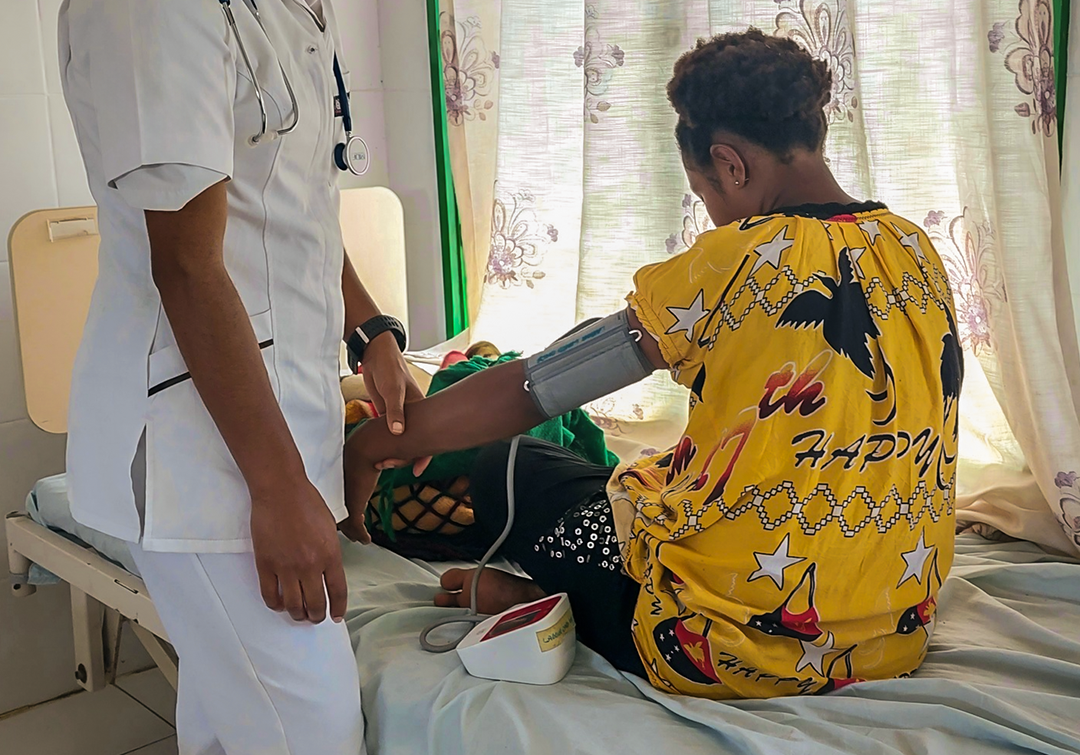
Investing in Workforce Training and Expansion of Rural Outreach Seen as Key to reviving Healthcare in PNG.
Papua New Guinea (PNG) is a geographically challenged country with the majority of its population living in rural areas. Based on this fact, research by the World Health Organisation (WHO) in 2019 highlighted significant inequities in accessing primary healthcare. Health services in the country are provided by both the government, private sector, private public partnerships and Non-Government Organisations (NGO), including churches. The churches are an important partner in providing rural health services and training of health workers. Churches provide 49 per cent of all rural health services and 45 per cent of the overall National Health Services. In addition, churches employ 25 percent of health workers in the country. An example of another NGO that works alongside the Provincial Health Authorities (PHAs) in Hela, Southern Highlands, and Gulf Provinces is the Santos Foundation. According to their website, they support the delivery of health services for a catchment population of over one million people (11 per cent of the total population of PNG). The foundation focuses on infrastructure improvements, workforce development, and addressing specific public health issues such as TB, malaria, cervical cancer screening and vaccination programs. NGOs are crucial for enhancing access to healthcare, particularly in remote areas.
The PNG health system faces many challenging factors such as a shortage of medical staff, inadequate health infrastructure, accessibility problems and shortage of medicine. The World Health Organisation (WHO) released a report stating the need for the increase in the training of health workers. The report also highlighted the lack of up-to-date and sustainable human resources information systems which are important when it comes to the management and productivity of the health workforce.
The Bulolo Hospital for example, which serves over 100,000 people in the district, was rebuilt in 2018 by contractor PNG Forest Products, with funding of K5 million from the Australian Government, the PNG Government and the Asian Development Bank. However, according to an article in The National newspaper in 2024, the Level 4 district hospital is experiencing a severe shortage of medical staff, particularly doctors. The Morobe Provincial Health Authority CEO Dr Kipas Binga said the hospital has been without a doctor for twenty years. This impacts the hospital’s ability to serve its urban population of 9,000 and patients from surrounding areas like Menyama and Wau-Waria. Despite having essential equipment like a laboratory, X-ray machine, and ultrasound machine, the lack of qualified personnel hinders their use.
These challenges have resulted in the National Government adopting the “back to basics” approach. This approach entails investing in human resources and health related infrastructure across the country with the aim of improving access to primary health care, especially in rural and remote areas.
The 2025 national health sector budget is K2.86 billion. According to Prime Minister James Marape, this is a transformative milestone that will highlight the development of specialised hospitals for heart and cancer care including other key components such as district and provincial hospitals constructions and upgrades, health services improvement, health impact programmes, New NCD hospital, medical supply distribution, community health workers and workforce and training.
Of this significant budget allocation, K10 million will go towards training for Community Health Workers. A further K20 million was allocated to support tertiary training in Medicine and Health Sciences to further improve capacity-building for healthcare professionals. The government appears focused on health infrastructure development, but how many staff do we need to operate those facilities? As we continue to prioritise the building of new facilities, do we have the workforce to staff those facilities? Will the government’s back-to-basics approach and the K2.86 billion health budget be enough to address PNG’s long-standing healthcare challenges?

Leave a Reply