
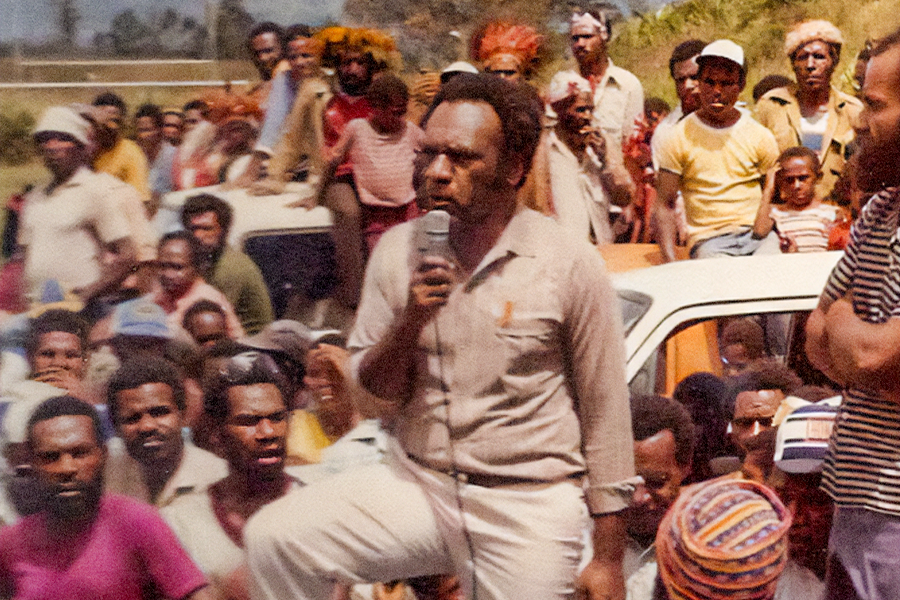
Before Papua New Guinea gained independence, a significant pay disparity existed between colonial expatriate workers and their Papua New Guinean counterparts. A young mechanic from Simbu Province, Iambakey Okuk, witnessed this firsthand.
Born in 1945 in Simbu Province, Sir Iambakey Okuk quickly proved to be a fast learner, groomed for white-collar training in Australia. However, he chose a different path, opting to become a mechanic—a hands-on profession that would teach him the importance of motor vehicles to the economy.
This decision kept Okuk grounded in colonial PNG, allowing him to witness and actively participate in the political changes that were taking place. When he began his career as an apprentice mechanic with the Commonwealth Department of Works, Okuk was confronted by the reality of a dual pay system. Despite doing the same job, Australian and European mechanics were paid significantly more than Okuk and other Papua New Guinean workers.
This unequal treatment fueled Okuk’s determination to fight for change. In 1962, he organised his first labour protest against discriminatory pay practices, although it took months of planning due to the dispersed locations of apprentices across the territory. The protest, which took place in Port Moresby, did not immediately resolve the issue, but it laid the groundwork for future demonstrations and was instrumental in pushing for fairer wages and better treatment of Papua New Guinean workers by the colonial government.
Okuk’s early activism was a stepping stone to a long and influential political career. His commitment to equality and social justice followed him into national politics, where he became one of PNG’s most prominent leaders. He served as Deputy Prime Minister, the country’s first Minister for Agriculture and Fisheries, Minister of Primary Industries, Leader of the Opposition, and Minister of Transport. Notably, he played a key role in the establishment and localisation of Air Niugini in 1972.
Iambakey Okuk’s legacy as a champion of labour rights and his efforts to fight inequality are still remembered today. However, the question remains: Has the dual pay system truly disappeared in Papua New Guinea, or do disparities in treatment and wages still exist in different forms?

Leave a Reply