
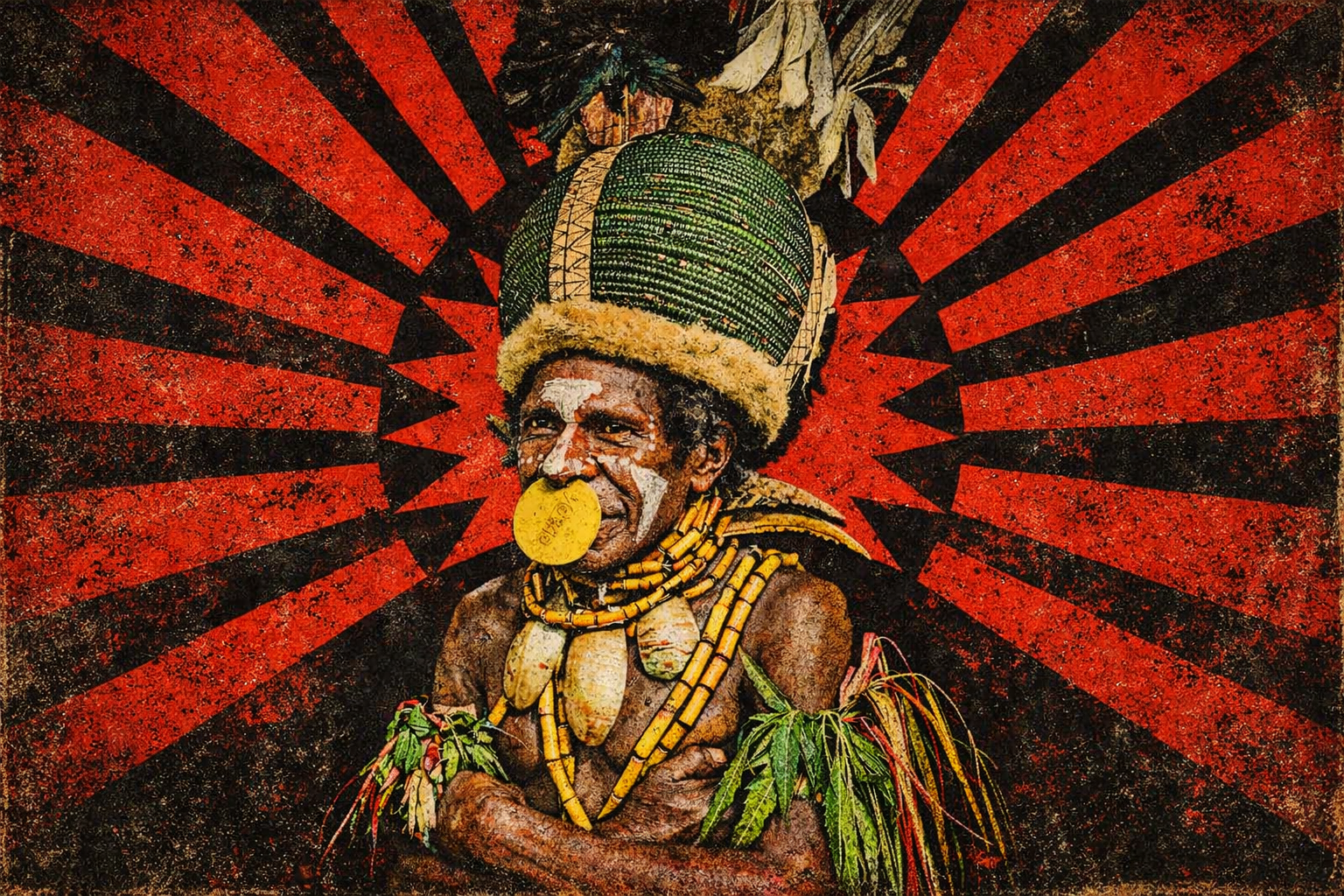
A Living Symbol of Identity, Craft, and Tradition
Papua New Guinea (PNG) is renowned for its extraordinary cultural diversity, often described as a land of a thousand tribes and cultures. One of the most striking expressions of this diversity is found in the wide range of traditional headdresses worn across the country. These headdresses are deeply symbolic, reflecting tribal identity, spiritual beliefs, social status, and a close relationship with the natural environment.
Among the most distinctive is the mimor beetle headdress of the Kalam people, who live in the remote mountainous region of Simbai in Madang Province. This remarkable headdress is more than decorative; it represents identity, prestige, and cultural continuity within Kalam society.
The Kalam headdress is crafted through a careful and highly skilled traditional process. Men gather natural materials from the surrounding forest, including the iridescent shells of the mimor beetle, which form the central feature of the headdress, as well as orchid stalks, feathers, and cuscus fur. A flexible base is created using coiled orchid stalks and strengthened with string or other binding materials. The beetle shells are then meticulously hand-sewn or woven into the base, often arranged in precise linear patterns. Layers of cuscus fur and brightly coloured feathers are added, and the structure is tightly wrapped to secure its tall and distinctive form.
Worn during important cultural ceremonies, the Kalam headdress symbolises social status, cultural pride, and a deep connection to nature. It is a visible expression of knowledge passed down through generations and reflects the craftsmanship and environmental understanding of the Kalam people.
Today, the Kalam headdress remains culturally significant, but like many traditions, it faces challenges. Modern influences, reduced transmission of traditional skills to younger generations, and environmental pressures that limit access to natural materials all threaten the continuation of this art form. At the same time, cultural festivals, documentation efforts, and renewed interest in heritage are helping to keep the tradition alive.
As modern life continues to reshape Papua New Guinea, an important question remains: how can traditions like the Kalam mimor beetle headdress be protected and passed on, so they remain living symbols of identity rather than fading artefacts of the past?


Leave a Reply