
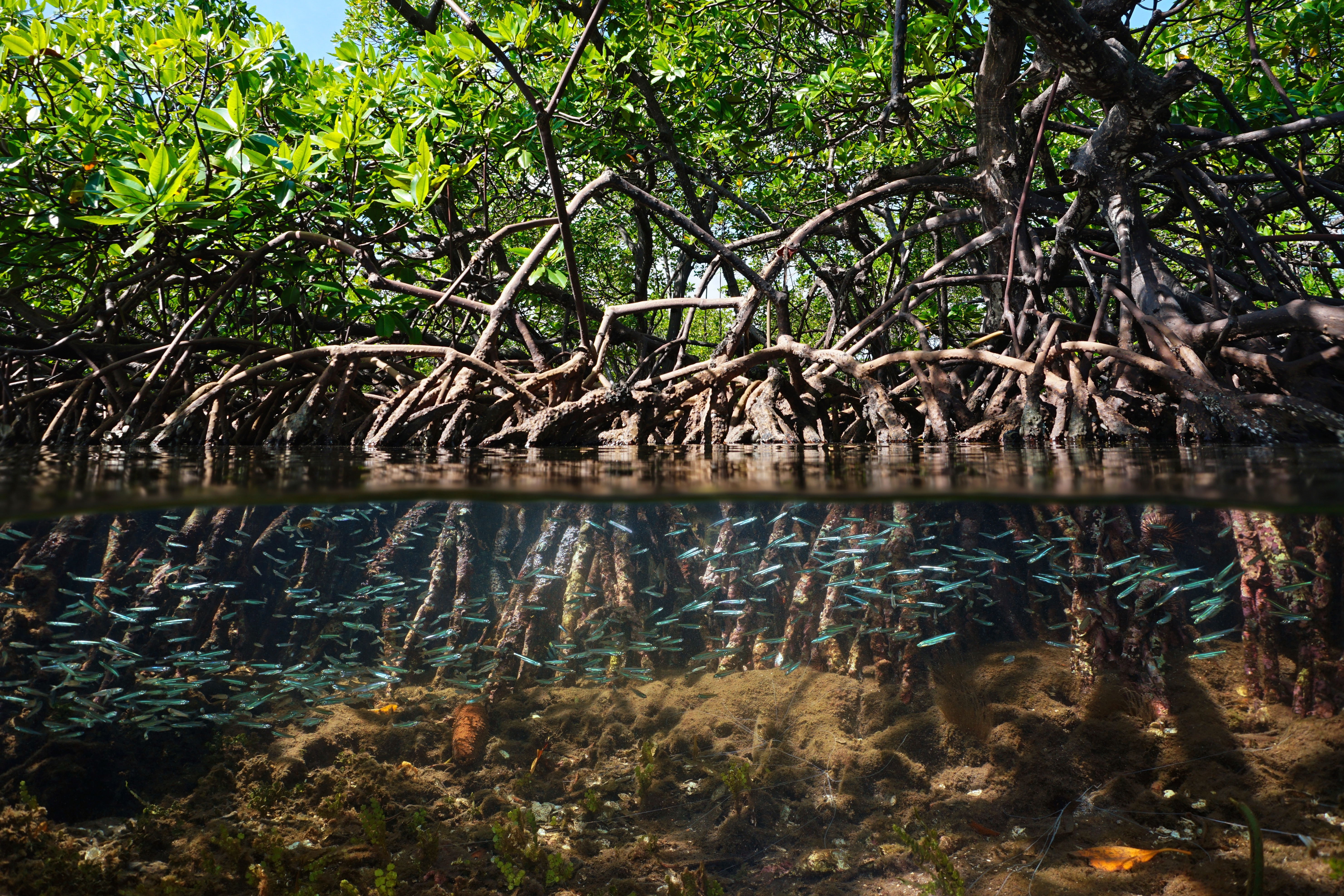
Mangrove forests may seem to many of us like just trees that grow along the coastlines; however, do you know how crucial mangrove forests are for environmental health, biodiversity, and the livelihood of coastal communities in Papua New Guinea (PNG)?
There are over 110 mangrove species in the world and they are one of the undervalued ecosystems. Mangroves are the only trees that thrive in salty waters. According to research by the United Nations Environment Programme, over a thousand plant and animal species depend on mangroves for survival. Mangroves also play a vital role in capturing, transforming, and storing carbon emissions faster than terrestrial forests. It also acts as a buffer zone against coastal erosion and tidal waves.
According to the Climate Change Development Authority (CCDA), PNG has an estimated coverage of over five hundred thousand hectares of mangrove forest, which is two percent of the total landmass of PNG. Mangroves are found in the coastal areas of PNG, and the people depend on mangroves for firewood, building materials and even traditional medicine. However, the sad fact is that many mangrove forests are diminishing at a very rapid pace because people keep cutting them down without taking the responsibility of replanting them. As a result of this, shoreline degradation is taking place and the sea levels are rising, claiming the shorelines as people are forced to relocate their homes to higher grounds.
PNG currently has a Community-Based Mangrove Planting Handbook which was compiled by the CCDA with funding from the Asian Development Bank (ADB) however, the country does not have a mangrove policy in place to safeguard mangroves and its sustainability and the lack of awareness drives and campaigns on the importance of mangroves to coastal communities exemplifies the risk of mangrove forests being destroyed.
With the acceleration of climate change resulting in the rise in sea level, the diminishing of mangrove forests leaves coastal communities more vulnerable than ever. Can PNG afford to overlook the vital protection of its mangrove forests?

Leave a Reply