
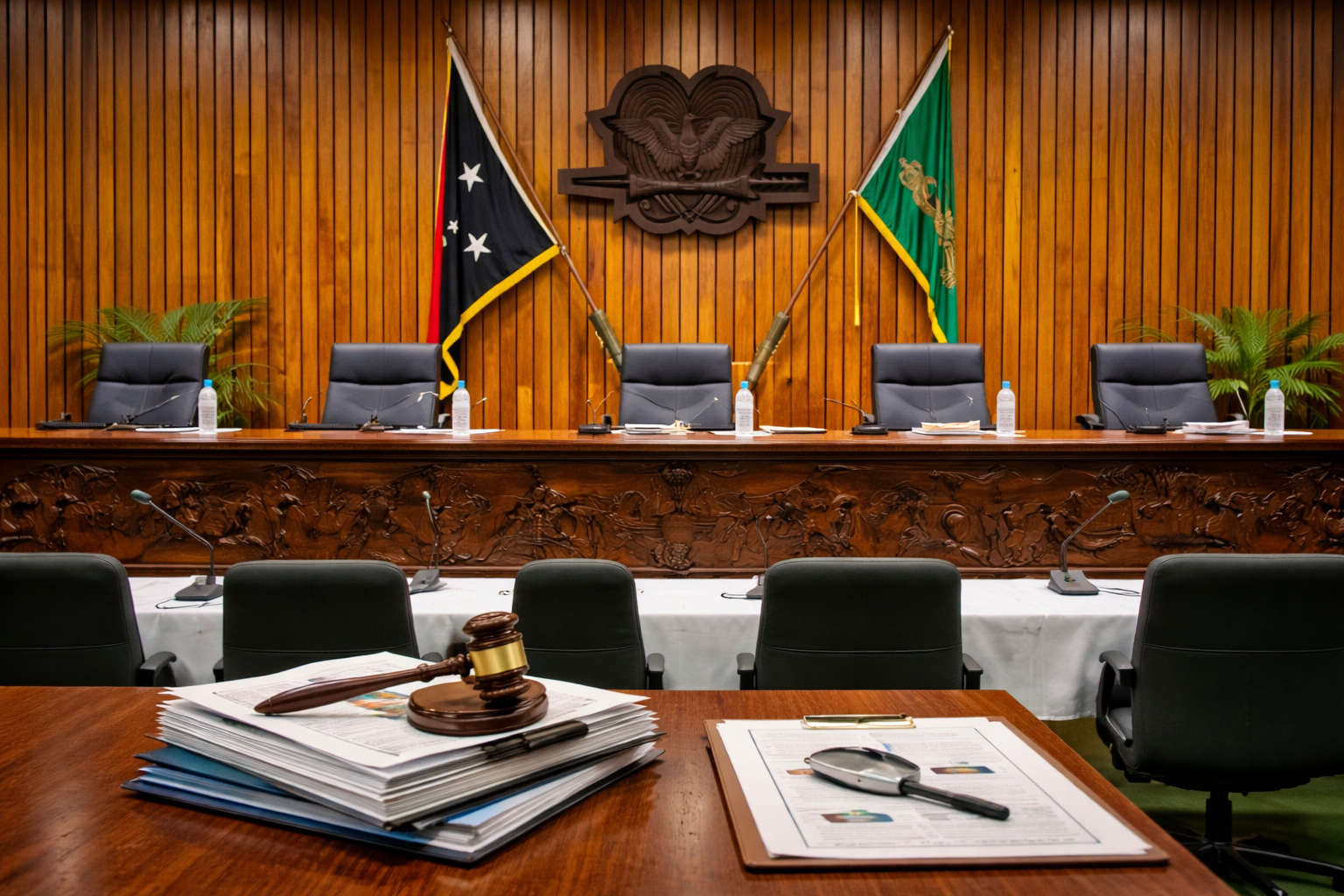
How PNG’s Parliamentary Committees Strengthen Oversight, Transparency, and Public Participation.
In Papua New Guinea (PNG), parliamentary committees play a vital role in supporting the work of Parliament and strengthening democratic oversight. These committees are established to ensure broader participation by Members of Parliament (MPs), particularly backbenchers, in the legislative and governance process.
Sections 118 to 123 of the PNG Constitution provide for the establishment of the parliamentary committee system. The purpose of this system is to enable detailed scrutiny of government activity across major areas of national governance, including the mandatory Public Accounts Committee. Ministers are not permitted to serve on these committees, ensuring independence from the executive branch. Membership is drawn mainly from backbench MPs and is intended to be widely distributed.
Each committee is led by a Chairperson and a Deputy Chairperson, typically drawn from opposing sides of Parliament, with one supporting the government and the other from a non-supporting party or coalition. Both office holders have the right to access relevant ministers, government departments, and policy briefings, while maintaining confidentiality where required.
Parliament also has the authority to establish Sessional, Select, or other specialised committees and to organise parliamentary business in a way that allows sufficient time for committee work. Committee membership is generally restricted to MPs unless otherwise provided for by law.
Parliamentary committees are appointed at the beginning of each parliamentary term and remain in place for the duration of that term. There are three main categories of parliamentary committees:
- Public Accounts Committee
- Standing Committees
- Permanent Committees
Committees may be established through several mechanisms, including the Constitution, Acts of Parliament, Standing Orders of Parliament, and Resolutions of Parliament. Once established, committees are responsible for examining matters relating to legislation, policy, government administration, and public finance. Their work may include site inspections, briefings, and public hearings conducted on behalf of Parliament.
Committees carry out their responsibilities through formal inquiries, during which they gather evidence, hear submissions from stakeholders, and question officials. Their findings and recommendations are compiled into reports that are formally tabled in Parliament. This process also provides an important platform for individuals and organisations to contribute to national policy-making, ensuring that public views are recorded and considered in parliamentary decision-making.
Parliamentary committees are supported by a dedicated Secretariat, which provides research, advisory, administrative, and secretarial support. The Secretariat coordinates committee meetings, briefings, public hearings, and inquiries, and is responsible for drafting committee reports for presentation to Parliament.
As a key accountability mechanism within PNG’s democratic system, parliamentary committees play an essential role in transparency and oversight. An important question remains: how can Papua New Guinea further strengthen its parliamentary committee system to improve accountability, enhance transparency, and encourage greater public participation in government decision-making?

Leave a Reply